
Home / Free guides / Storage, ventilation and the elements
Storage, ventilation and the elements
Never stored in a shipping container before? These tips will help you protect your things. Our containers are built to keep the weather out, but standard storage is not climate controlled, so careful packing, ventilation and the odd check all matter.
Free PDF (1 page, 0.7 MB). No email needed.
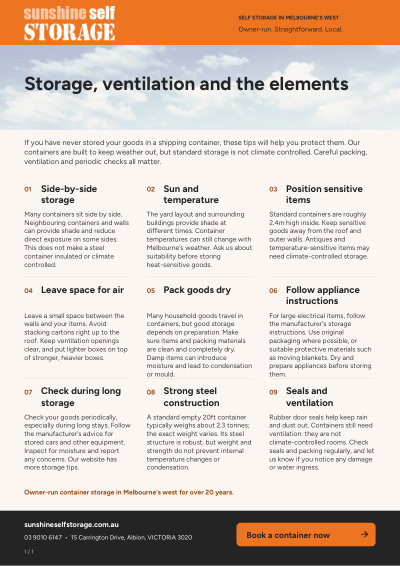
Nine tips for storing in a container
01
Side-by-side storage
Many containers sit side by side. Neighbouring containers and walls can shade some sides and reduce direct exposure. This doesn't make a steel container insulated or climate controlled.
02
Sun and temperature
The yard layout and nearby buildings give shade at different times of day, but container temperatures still change with Melbourne's weather. Ask us before you store anything heat-sensitive.
03
Position sensitive items
Standard containers are about 2.4m high inside. Keep sensitive goods away from the roof and outer walls. Antiques and temperature-sensitive items may need climate-controlled storage.
04
Leave space for air
Leave a small gap between the walls and your things, and don't stack cartons right up to the roof. Keep the vents clear, and put lighter boxes on top of stronger, heavier ones.
05
Pack goods dry
Make sure your things and your packing materials are clean and completely dry. Damp items bring moisture in, which can lead to condensation or mould.
06
Follow appliance instructions
For large electrical items, follow the manufacturer's storage instructions. Use the original packaging where you can, or moving blankets. Dry and prepare appliances before you store them.
07
Check during long storage
Check your things now and then, especially on long stays. Follow the manufacturer's advice for stored cars and equipment, look for moisture and tell us about any concerns.
08
Strong steel construction
An empty 20ft container typically weighs about 2.3 tonnes. Its steel structure is robust, but weight and strength don't stop temperature changes or condensation inside.
09
Seals and ventilation
Rubber door seals help keep rain and dust out, but containers still need ventilation: they aren't climate-controlled rooms. Check the seals and your packing, and let us know if you notice any damage or water getting in.
A quick packing checklist
- Pack everything clean and completely dry
- Keep furniture off the floor with pallets
- Use cloth covers, not plastic, and skip rubbish bags, which trap moisture
- Stand mattresses on end
- Wedge fridge and freezer doors open
- Leave a small gap from the walls for air
Better kept somewhere else
Because containers follow the weather, some things are better in climate-controlled storage: anything that melts, warps or spoils in heat, like candles, wax, vinyl records, some cosmetics, artworks, antiques and sensitive electronics.
More free guides
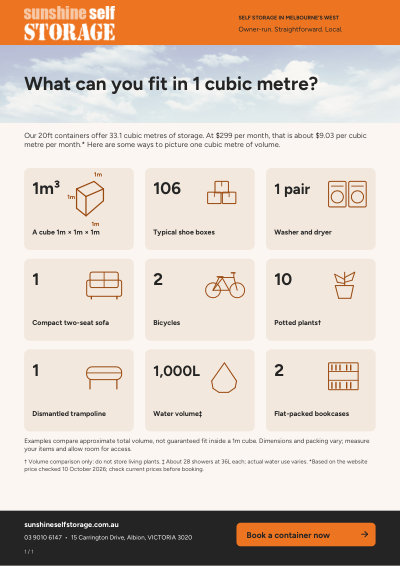 What Can You Fit in 1 Cubic Metre?
A picture guide to how much space your things really take.
Read online or download
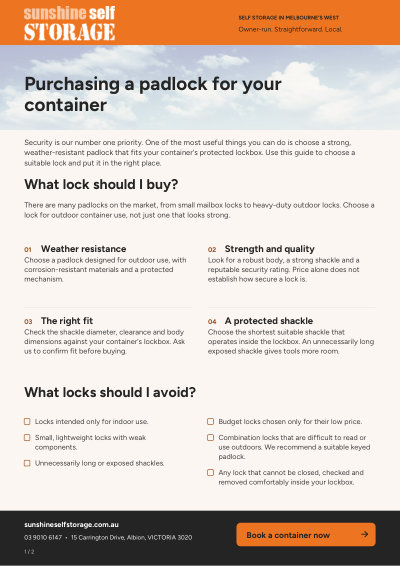 Purchasing a Padlock for Your Container
What to look for in a padlock that suits outdoor use and fits the lockbox.
Read online or download
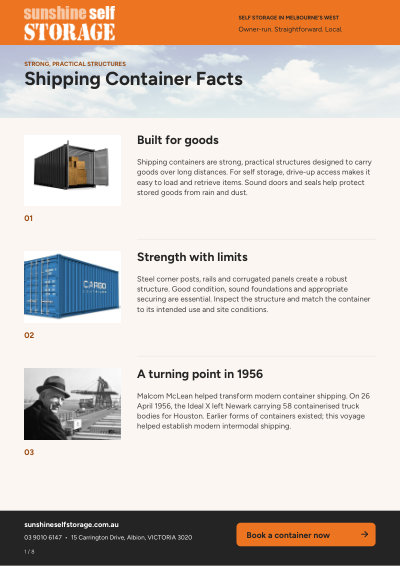 Shipping Container Facts
How containers are built, where they came from and what they can handle.
Read online or download
Ready to store with us?
Book online in about two minutes. No deposit and no setup fee.